Science
Science
The Science department embraces the motto “Do & Discover.” Teachers guide students in hands-on experiments that allow them to experience the scientific process first-hand. Through careful observation and the use of data and evidence, students learn to make thoughtful inferences and communicate their findings effectively.
Key Approach
Students engage in inquiry-based learning that promotes curiosity, exploration and critical thinking. Through hands-on experiments, they apply scientific facts, concepts and principles while developing essential process skills such as observing, comparing, classifying, using scientific apparatus, communicating, inferring, predicting, analysing, generating possibilities, evaluating, and formulating hypotheses.
Life Sciences Programme
With rapid advancements in science and technology and the increasing importance
of life sciences in the 21st century, it is vital for students to develop
curiosity about their environment and understand how scientific principles
and innovations shape the world around them.
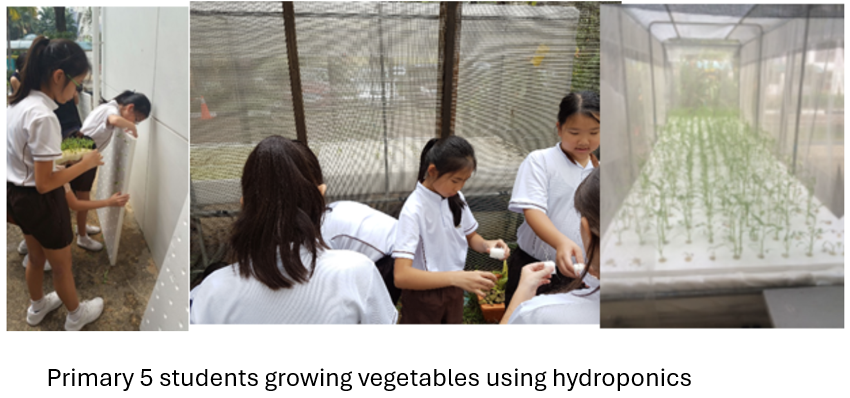
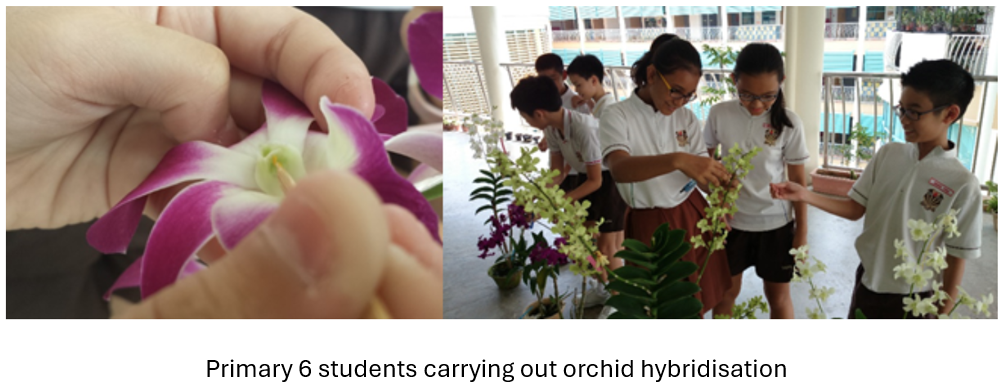
The Science Department has designed a comprehensive programme that engages students in life sciences from an early age. Through hands-on activities, students make predictions, observe scientific phenomena, and learn in authentic contexts such as growing fungi and edible plants, cultivating vegetables using hydroponics, and experimenting with orchid hybridisation. These experiences make Science come alive and help students develop a deeper appreciation of its relevance in their everyday lives.
|
Level |
Module |
|---|---|
|
Primary 3 |
Fun with Fungi |
|
Primary 4 |
Exciting Edibles |
|
Primary 5 |
Hydroponics |
|
Primary 6 |
Orchid Hybridisation |
STEM ALP on Sustainability: Caring for the Environment and Community
Our school’s Applied Learning Programme (ALP) empowers students to apply scientific concepts and coding skills to tackle real-world challenges. Rooted in scientific inquiry, the programme nurtures curiosity and creativity as students explore how STEM can be harnessed to design innovative, sustainable solutions that benefit both people and the environment.
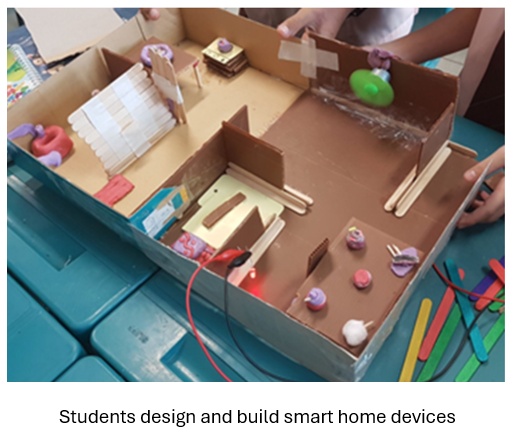
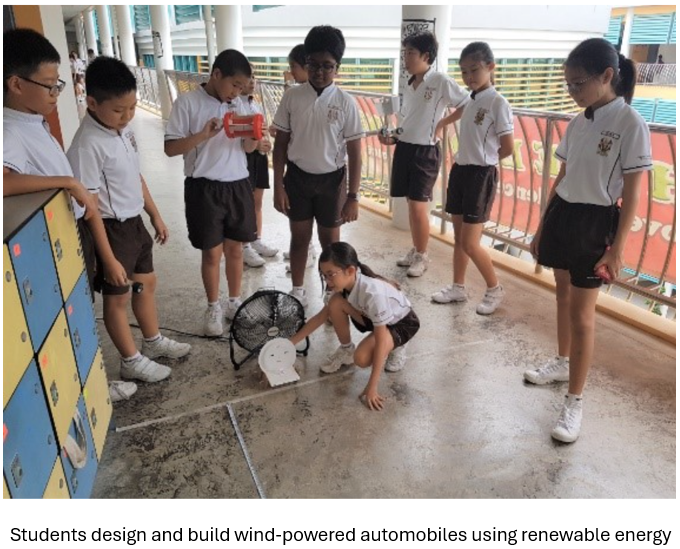
Through projects such as designing wind-powered vehicles, floating or energy-efficient homes, and smart home prototypes, students apply scientific principles with a strong emphasis on environmental stewardship. These hands-on experiences foster collaboration, innovation, and leadership, deepening students’ appreciation of how Science and technology can drive sustainability.